Negative to Positive: Working the Darkroom Magic
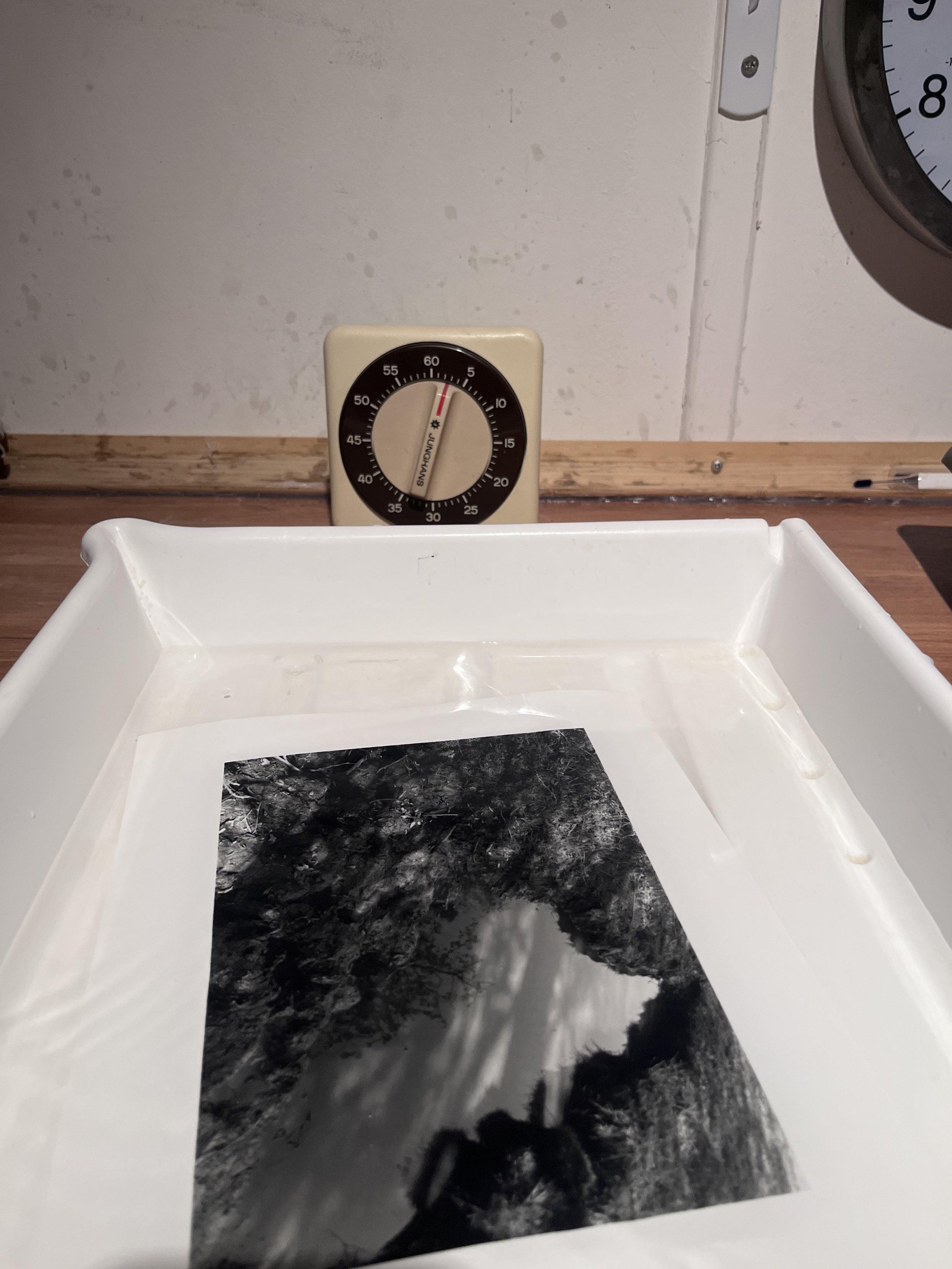
The developing tray - where much of the magic happens
I can’t help but describe the darkroom process as “magic”. It is probably a reflection of my weak grasp of physics. I know that the film and paper is coated with light sensitive silver crystals suspended in gelatin, but a process that it essentially 200 years old still bemuses me, however much I enjoy its effects. I have the books, but I will try one day to get into the detail and understand the chemicals and their reactions. I know it would be helpful, but physics never really stirred me.
Until I built my own darkroom a few years back I was mostly reliant of labs. But you never get to play with the print. Sometimes I would borrow darkroom time from a friendly local wedding photographer. This was particularly necessary when time was of the essence. My right to be aboard the race yacht Lion New Zealand was strengthened when the crew realised that I was the only one able to use the supplied cameras. Analysing new sails ahead of a round-the-world race had me laying on the boom then rushing off to print the shots. I really should apologise to the owner of the darkroom for the amount of wasted paper due to my inexperience in darkroom methods, but the ability to turn round images made a real difference at the time. But the Polaroid camera proved faster still.
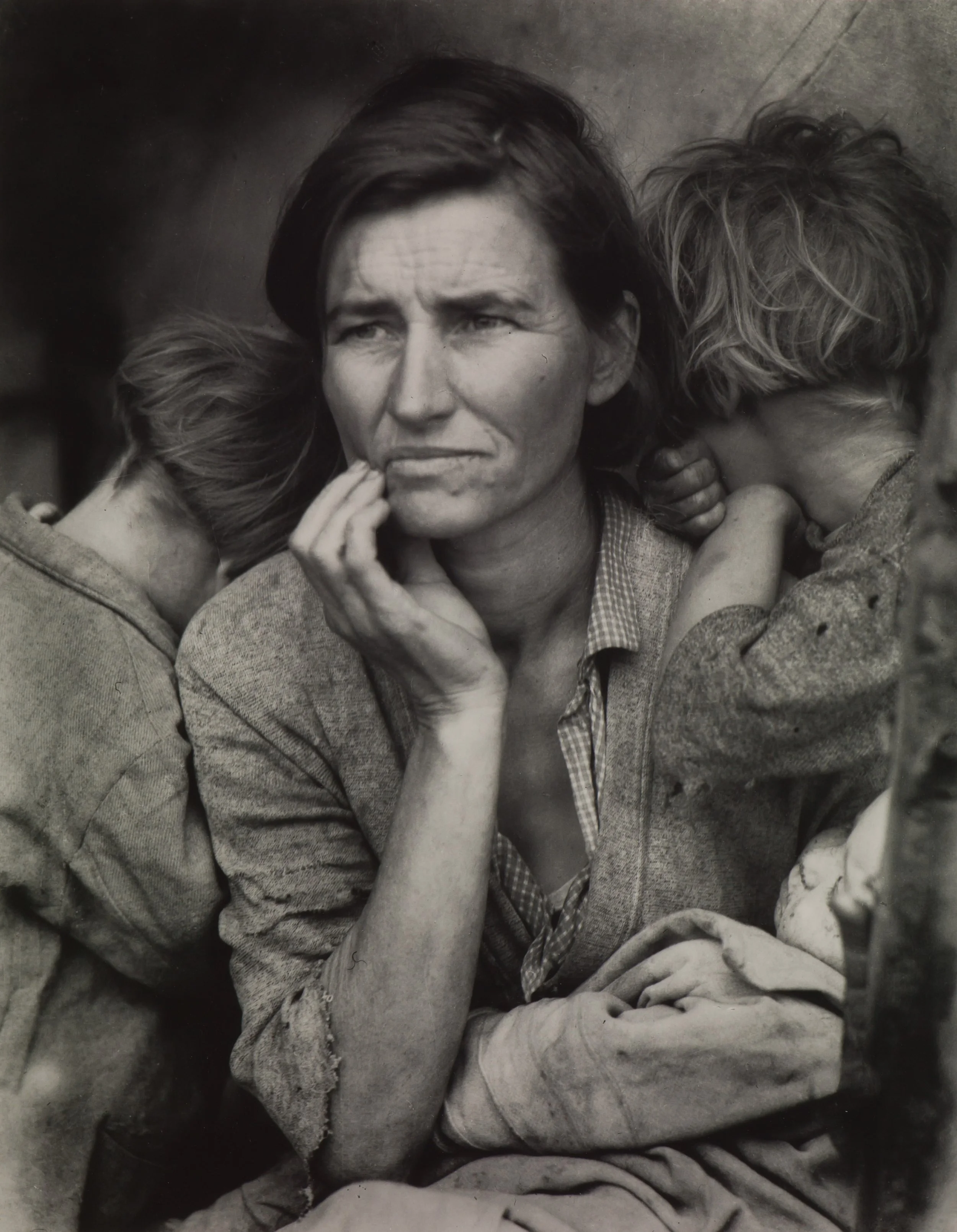
Dorothea Lange “Migrant Mother” (1936). Editorial credit: Rawpixel.com / Shutterstock.com
I love seeing other photographers’ darkroom set ups, particularly those who, like me, have chosen to occupy quite small spaces. At first I pressurised myself to ‘go large’, equating scale with creativity and wanting the wow factor of size. But then I considered the images that are, to me, most striking. Amongst the classics there is Cartier-Bresson. He didn’t rely on scale, but on capturing engaging moments that are still mesmerising to see on the wall. Dorothea Lange’s prints of “Migrant Mother”, an image which has had extraordinary impact, was printed around 10×8”.
Amongst contemporary photographers Michael Kenna’s images always astound me. Kenna prints almost exclusively in 8×8” format. He does so purposefully to draw the viewer in close for direct engagement. I am, of course, as awestruck as anyone by the perfect monumental prints of great photographers. I can think of many that have enthralled me when I’ve had the privilege of standing in front of them; the Hayward Gallery’s 2023-24 exhibition of works by Hiroshi Sugimoto was just staggering in the perfection of his huge prints, which still absolutely draw the viewer into the scene despite their size. But, for me, the absence of such scale in my own work is a positive limitation. Just like the limitation of frames on a roll it makes me think more carefully about the content. I may not be as determinedly methodical as Kenna and occasionally decide that an image might deserve a bit more scale, but it is a creative decision to break the norm, not an expectation. There are so many choices in the darkroom that eliminating one that might become particularly demanding allows me to focus any creative juice on the others (Mental note to experiment more with bleaching and toning prints).
For me, the detail of how I get to a print that I like is a journey that needs to be recorded in my darkroom notes. I wish I understood better what is happen exactly with those crystals and chemicals, but no more than I wish I understood how a train or car works on a journey. Do painters know the content of their paints? I don’t know, but do wonder whether this knowledge matters as much as the effect that a particular brand or type of paint has. Photography has a tendency to become focused on the machinery and chemistry, which just takes too much brain bandwidth for me and threatens to undermine the joy of its magic. Often it is the lack of control that most engages me. Sometimes the least careful press of the shutter button on the camera produces an intriguing image on the contact sheet in the darkroom, or a section of a carefully-composed shot is more engaging than the full frame. An out-and-out darkroom mistake produces something interesting and worth saving or building on with further work. It is very much the weaving journey of discovery that matters once I am deprived of a screen on the back a camera or phone to save, delete or retake to perfection.